Building Nivan from 0 to 1
from conference stage to a year-round series

The 2026 key visual, the conference in May, and the Creative Duel in September.
ROLE
Design and experience strategy lead, creative director
TEAM
About a dozen, across the US
FORMATS
Conference, Creative Duel, global series
TIMELINE
May 2026 to January 2027
~220
attendees, 2026 sold out
19
speakers, from GE HealthCare to Netflix
460+
responses across 16 live polls
60
industry leaders at the September 24 Duel
USER PROBLEM
Senior leaders in tech, AI, UX and design attend many events, but they rarely get to take part. Few events let them shape the conversation or give them a reason to connect and come back.
GOALS AND KPIS
Sell out the first conference, starting from scratch: about 220 attendees. Get the room taking part: 460+ responses across 16 live polls. Prove the Duel works on its own: 60 industry leaders on September 24. Bring people back between events: a global series from January 21.
STRATEGY
Turn Nivan’s idea, innovation across time, into experiences attendees take part in. For 2027 that grows into a year-round system: the flagship conference anchors the year, the Duel goes online and worldwide as a monthly series, and four time horizons, from a one-month prediction to a one-year time capsule, give people a reason to come back between events.
KEY LEARNINGS
People engage most with what the whole room can see. Afterward, attendees wrote about the debates and the letters to their future selves, not the agenda. And a volunteer team should only run what it can maintain.
MY ROLE
I lead design and experience strategy for Nivan, an innovation conference across tech, AI, UX and design. As its second core team member, I've helped build Nivan from 0 to 1, working directly with the founder on its direction. Together we've grown it from a one-day conference into a year-round series built around live debate. I'm also creative director to the designers, lead a team of about a dozen across the US, and oversaw the event app, which Jamie designed and three student developers built.
THREE FORMATS

MAY 21, 2026
Flagship conference
Institute of Design at Illinois Tech. Sold out, three Duels on stage.
SEPT 24, 2026
Creative Duel dinner
Chicago. Sold out, 60 industry leaders, two duels.

JAN 21, 2027 · NEXT
Global Creative Duel
Online. Nivan's first event open to a worldwide audience.
THE 2026 CONFERENCE
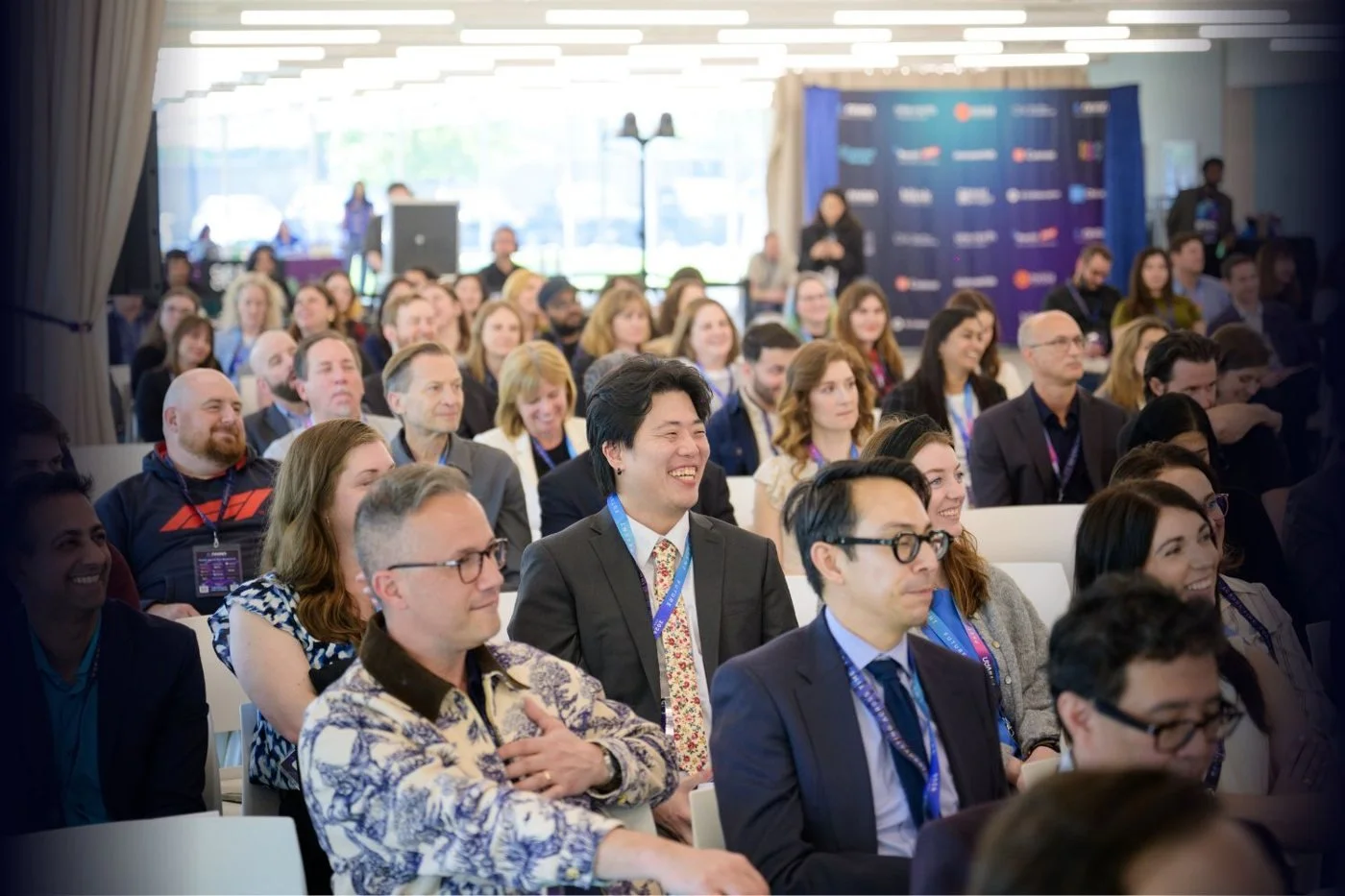
Sold out at about 220 attendees, starting from scratch: no past event, no photography and no brand. Our 19 speakers came from GE HealthCare, AbbVie, Microsoft, Netflix, Amazon and more.
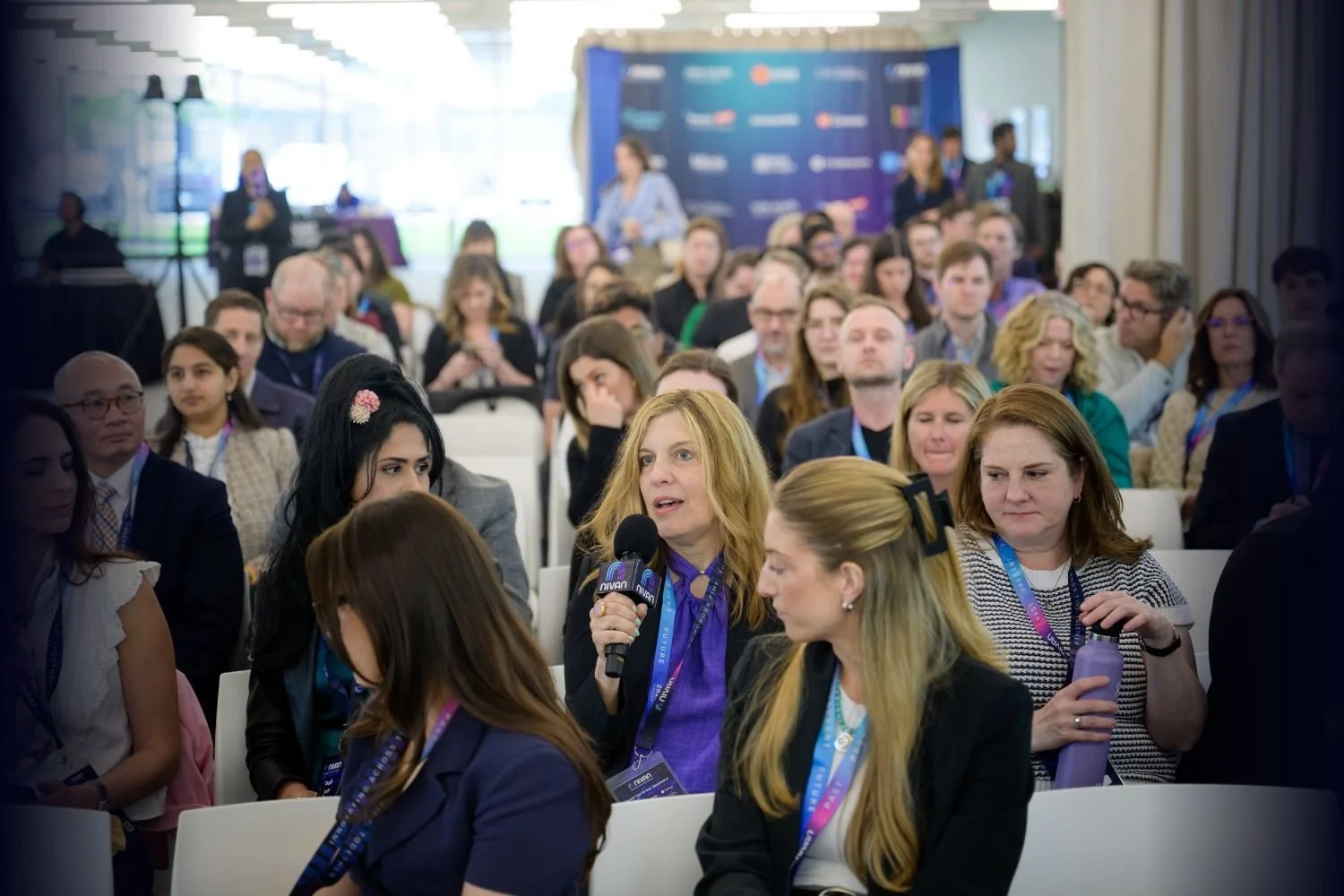
Nivan 2026 at the Institute of Design at Illinois Tech.
DECISION 01
Going where the audience already is.
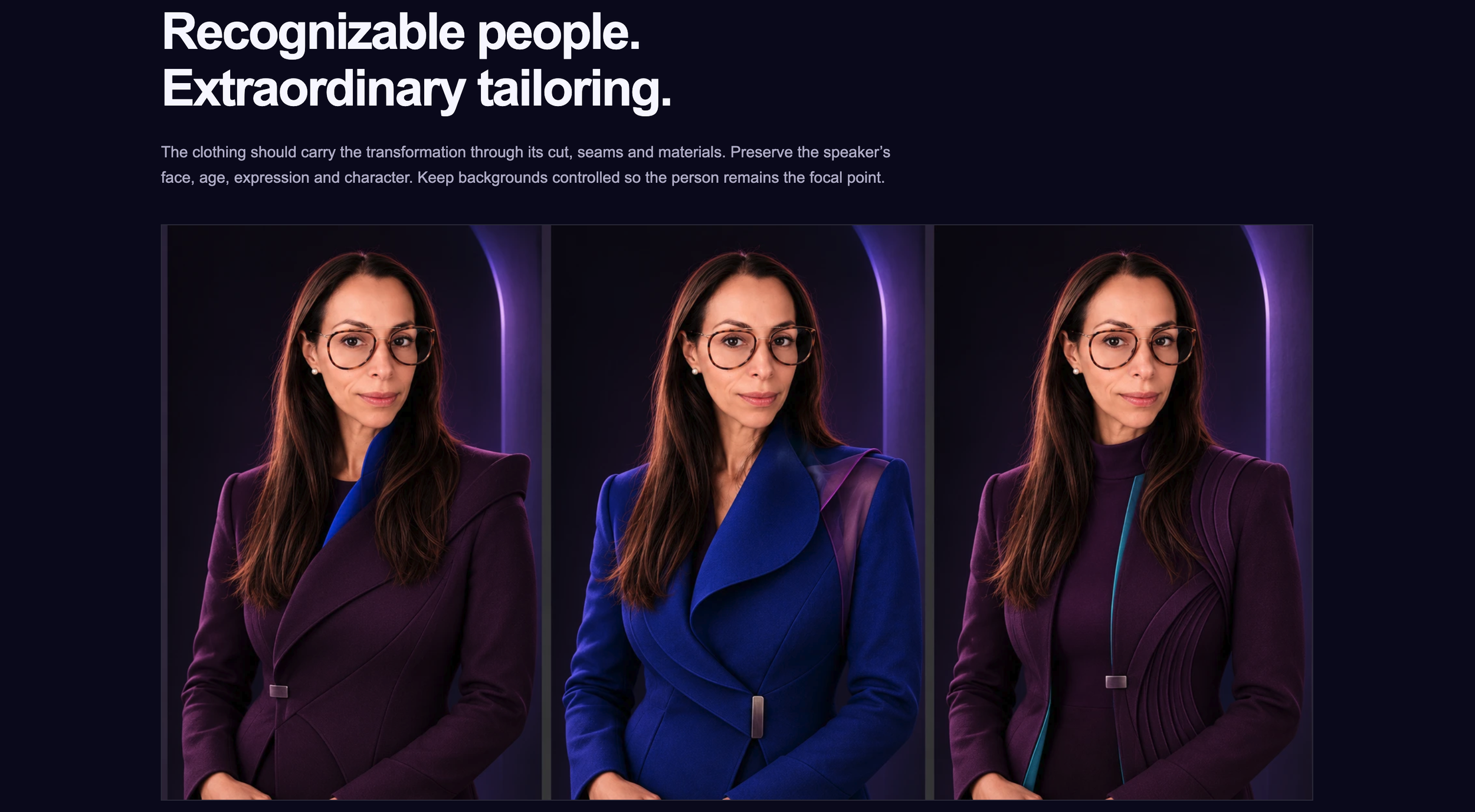
I pushed from the start to make LinkedIn, not Instagram, our main channel, because that's where our audience was and where the conversation about UX and AI is happening. With several designers working in parallel, the bigger risk was a brand that looked stitched together. So I set up a lightweight brand system: clear on the foundations, flexible enough for each designer to explore, with innovation across time as the thread through every piece. For a first-time in-person event with no photography to draw on, I led the team through an AI workflow: generated imagery and AI-altered speaker portraits, and I reviewed each one against the system before it went out. Our founder said afterward the website and videos “sold the whole thing.”
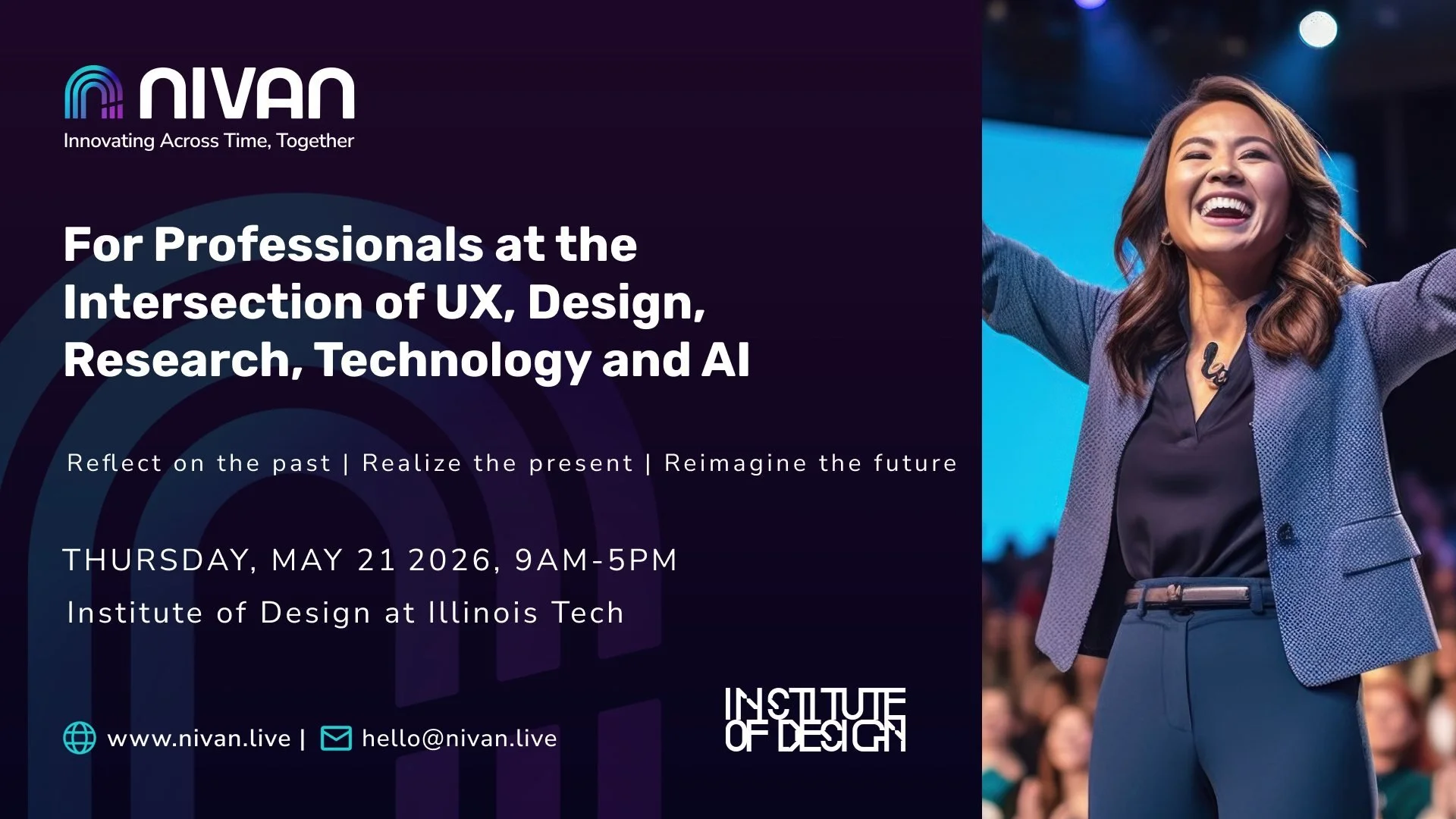
LinkedIn launch flyer from the 2026 brand system.
DECISION 02
Polls that followed the room.
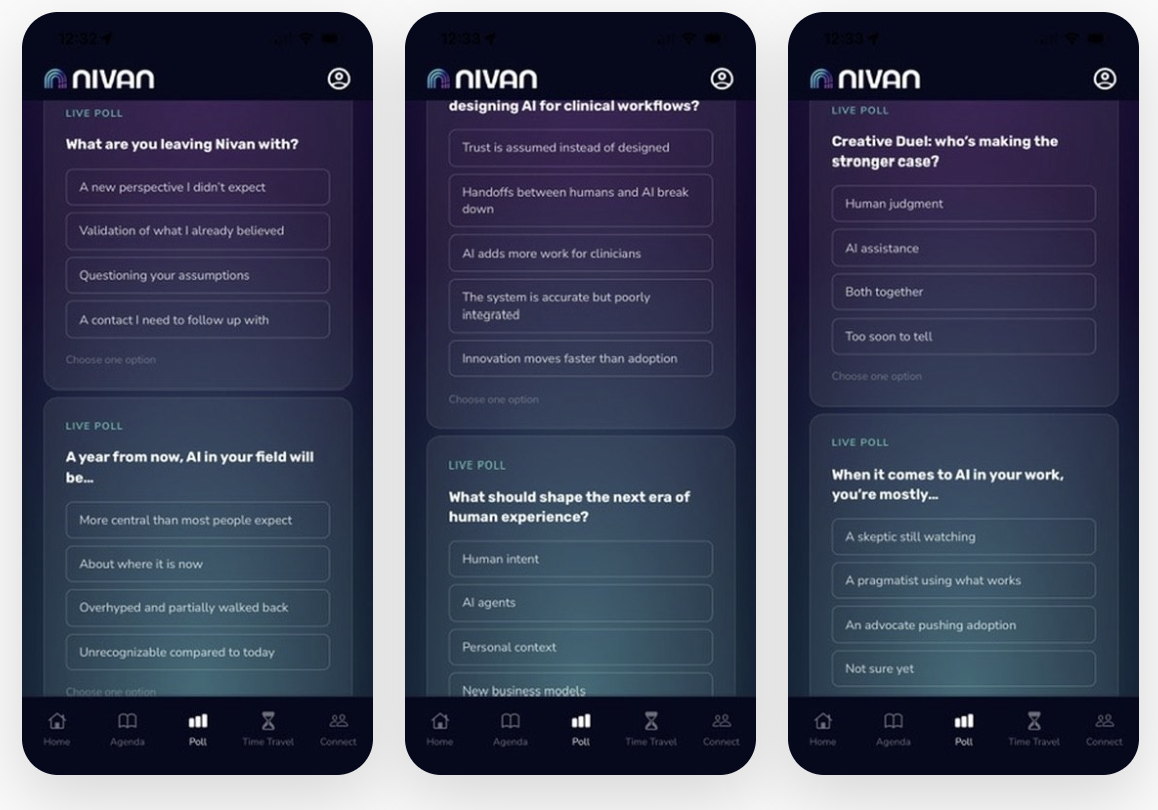
The safe version was one poll per session, written ahead. But an agenda only guesses what people will care about. So I kept a few general polls open all day and wrote new ones live as talks and debates landed, using AI to turn what I heard and saw into polls in real time. One turned a talk on AI in clinical workflows into a question for the room, with the speaker's own points about trust and handoffs as the options. The cost: no review, and it all depended on my presence in the room. The 16 polls drew 460+ responses.
DECISION 03
Letting lunch run itself.
We'd planned assigned seating and matchmaking. On the day, the lines ran long and people were already deep in conversation in them. Seating them by plan would have traded real conversations for scheduled ones. Structured networking works in small groups, not at this size, so I dropped it. The cost: no guaranteed introductions for anyone who came alone. Teammates saw people talking in line and staying at tables together.
THE CREATIVE DUEL: FROM STANDOUT SEGMENT TO ITS OWN EVENT
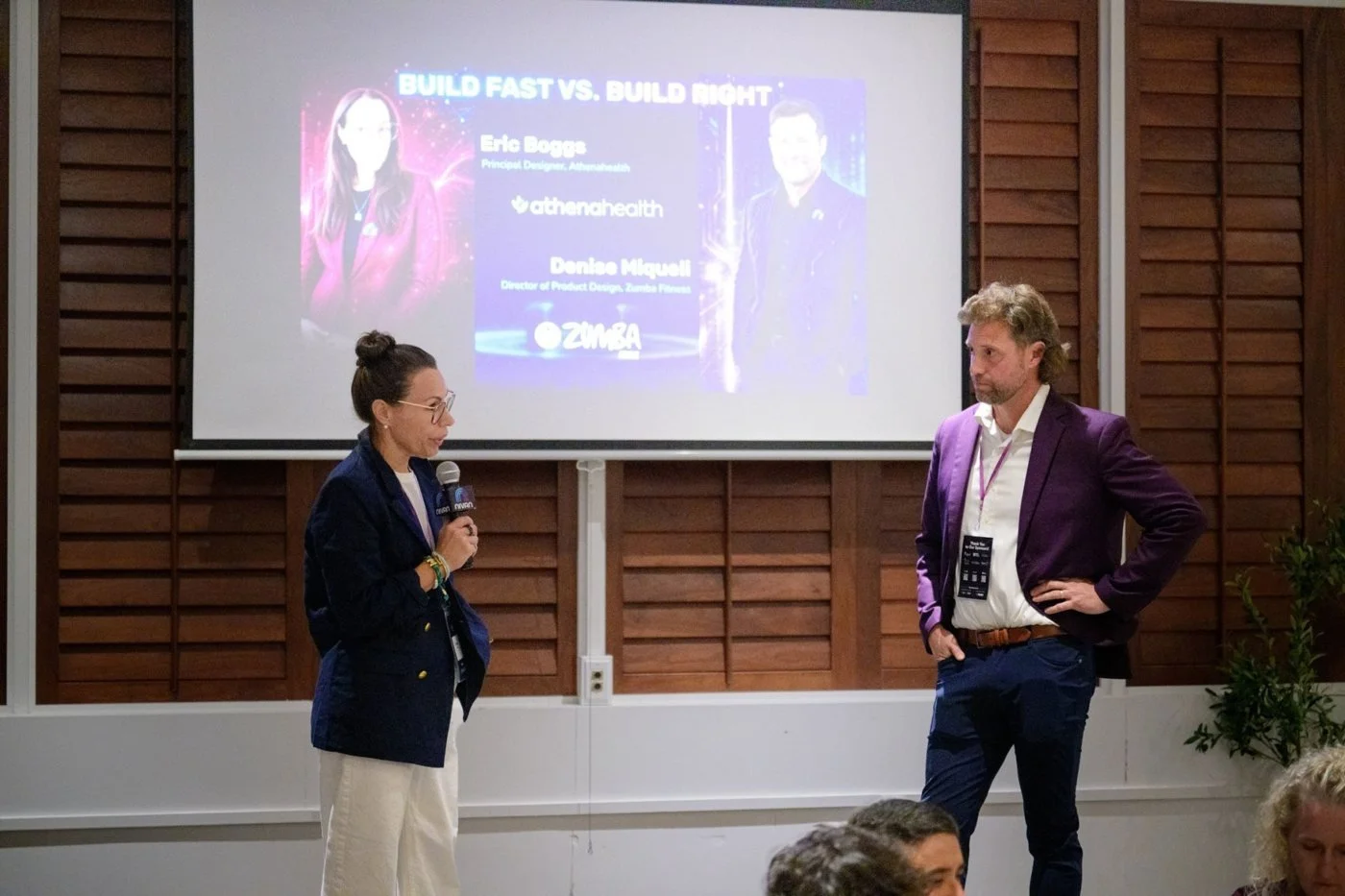
Three Creative Duels ran on the conference stage. The core team's post-conference retro and sponsors named them the standout, and debaters called the no-slides, no-script format among the most fun they'd been part of. So we ran the Duel as its own night, an MVP to test whether it could stand alone. It did. On September 24, a sold-out room of 60 industry leaders came to a sit-down dinner in Chicago for two duels: Karen Semone (formerly Salesforce) vs. Pavi Gupta (formerly SC Johnson) on Generalist vs. Specialist, and Eric Boggs (athenahealth) vs. Denise Miqueli (Zumba) on Build Fast vs. Build Right.
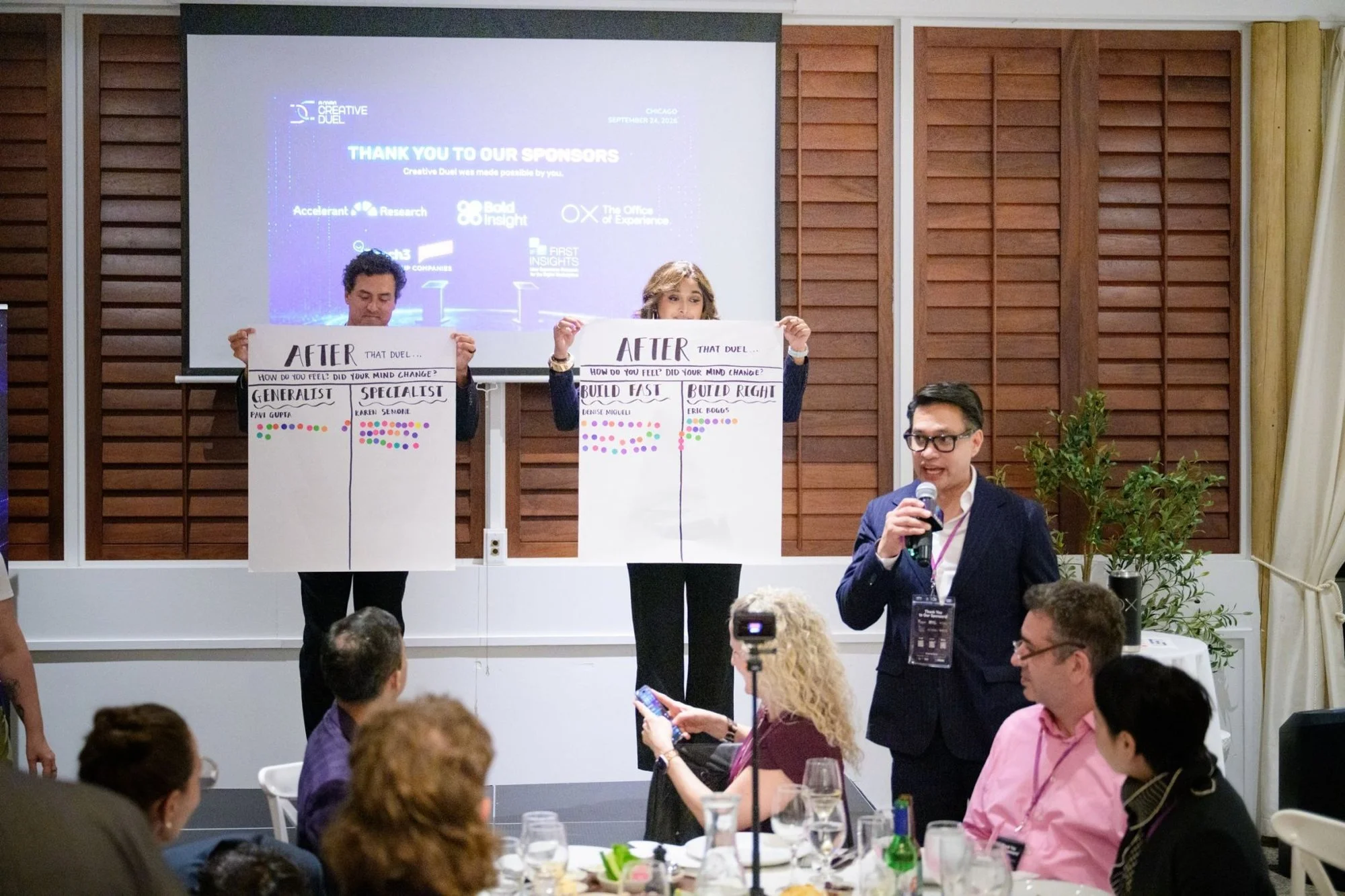
The after boards for both duels, read out in the room.
DECISION 04
A vote the whole room can see.
At the conference, the Duel vote lived on people's phones. For the dinner, I designed one the room could watch: an old school UX workshop dot sticker on a flipchart before the debate, another after on a fresh page, side by side. The winner was whoever moved the room, and the room saw itself move. I ran it on the night. We photographed the boards and had AI tally them on the spot, so results came back in the room. The real cost: the vote only lived that night. Once it ended, there was no reason to come back to it.
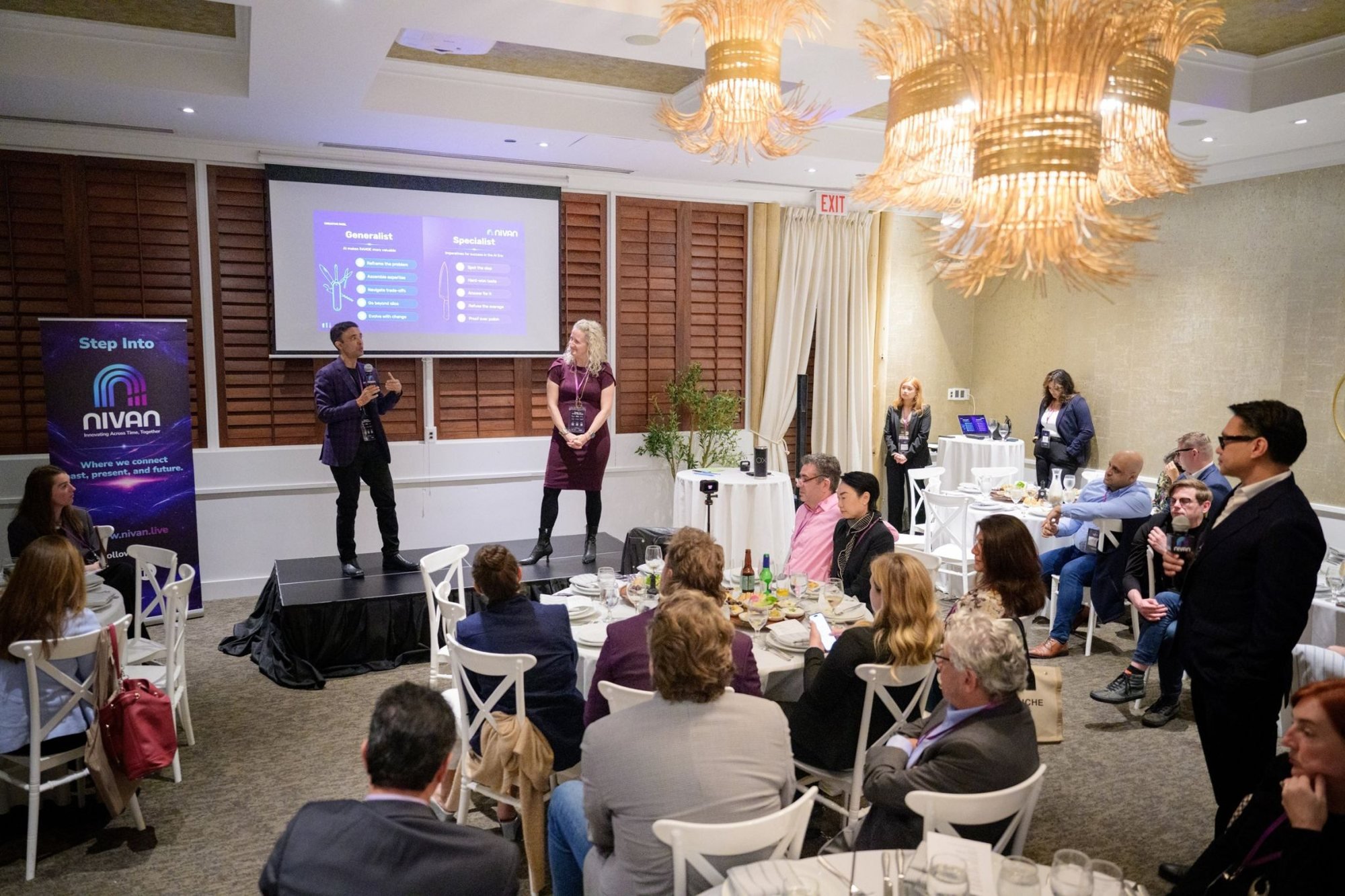
The Creative Duel dinner in Chicago, September 24.
TURNING IT INTO A YEAR-ROUND SYSTEM
The Duel worked as a night, but nothing carried it forward. That gap is why I led a planning workshop with our founder and teammates on one question: how do we bring people back between events? The answer was four time horizons, from a one-month prediction per Duel to a one-year Time Capsule opened at the next conference. Before-and-after votes aren't new; Intelligence Squared uses them. The long horizon is, and it's the part a competitor can't copy. Attendees already want it: a sponsor team that wrote letters to their future selves posted that they can't wait to open them at the next conference. A competitive analysis I scoped showed why that matters: talks for design leaders are crowded, debate is open, and nobody else will have what our 2026 audience predicted.
DECISION 05
Retiring the custom app.
Another decision I drove was retiring the custom app. Attendees singled out the app in their posts, but it was too much for volunteers to maintain, and nothing we needed required custom code. The founder and team agreed. The first test is the online Global Creative Duel on January 21, Nivan's first event open to a worldwide audience.
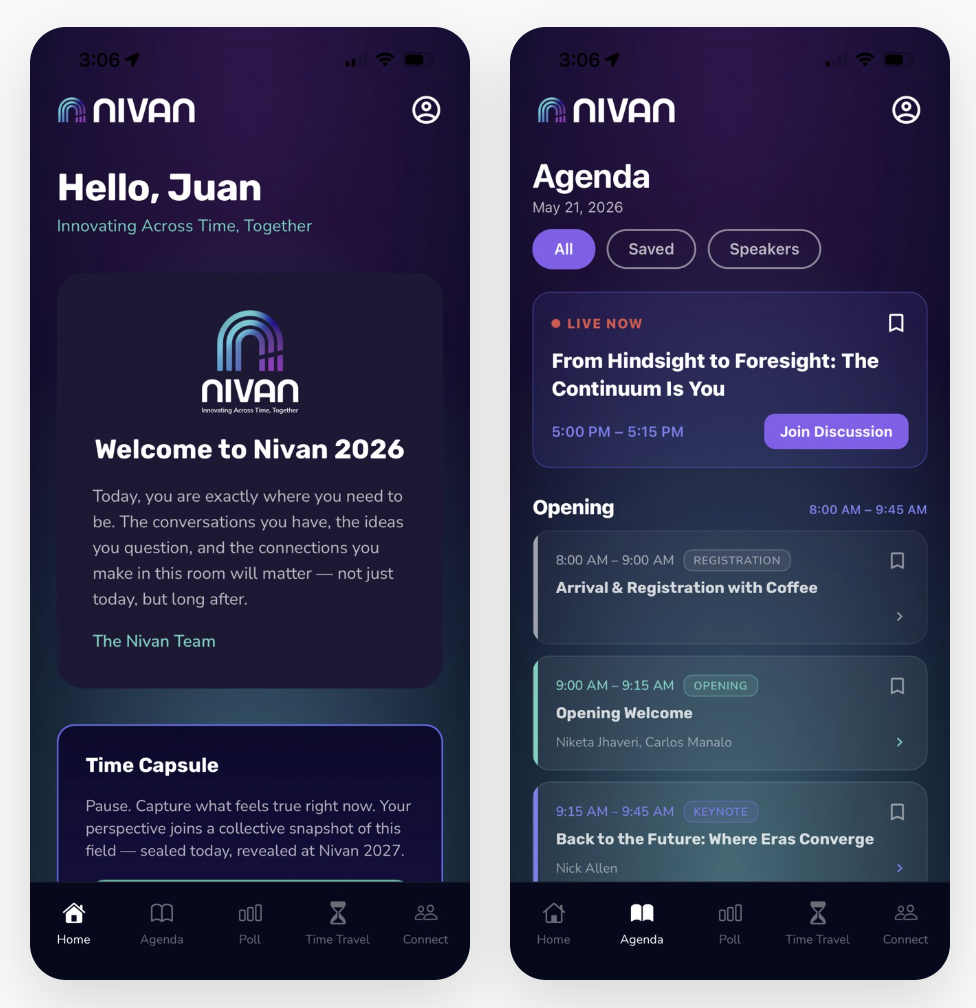
The 2026 custom app, retired for 2027.
“Sold the whole thing.”
NIVAN'S FOUNDER, ON THE WEBSITE AND VIDEOS
FOUR TIME HORIZONS
MOVING FORWARD
At the 2026 conference, the time capsule lived only in the app and got 9 entries, while a paper guestbook filled up. People take part in what's in front of them. So for 2027 I'm planning for a hybrid version: a booth at the conference reveals the past year's capsule entries plus an invite to submit entries for this year. Then the room sees last year's entries revealed on stage, and they're published online for everyone who wasn't there.
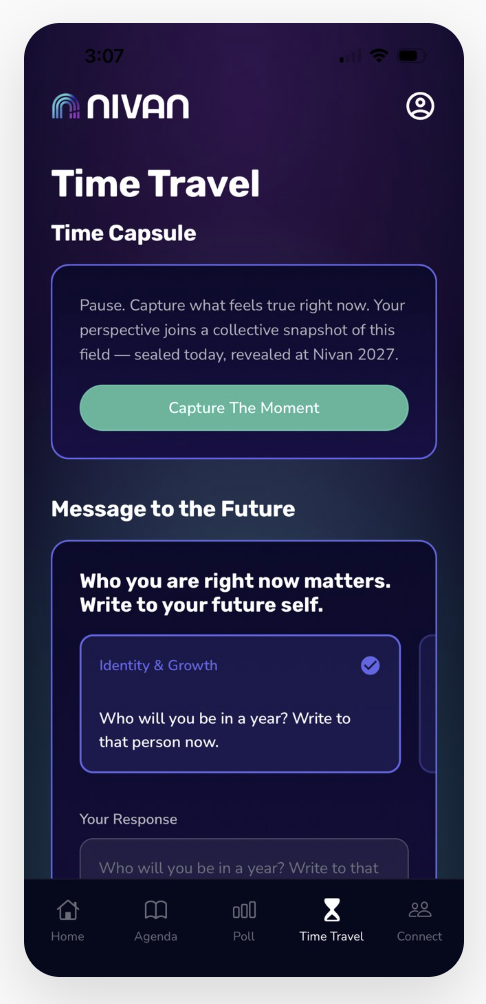
The 2026 Time Capsule, in the app only.
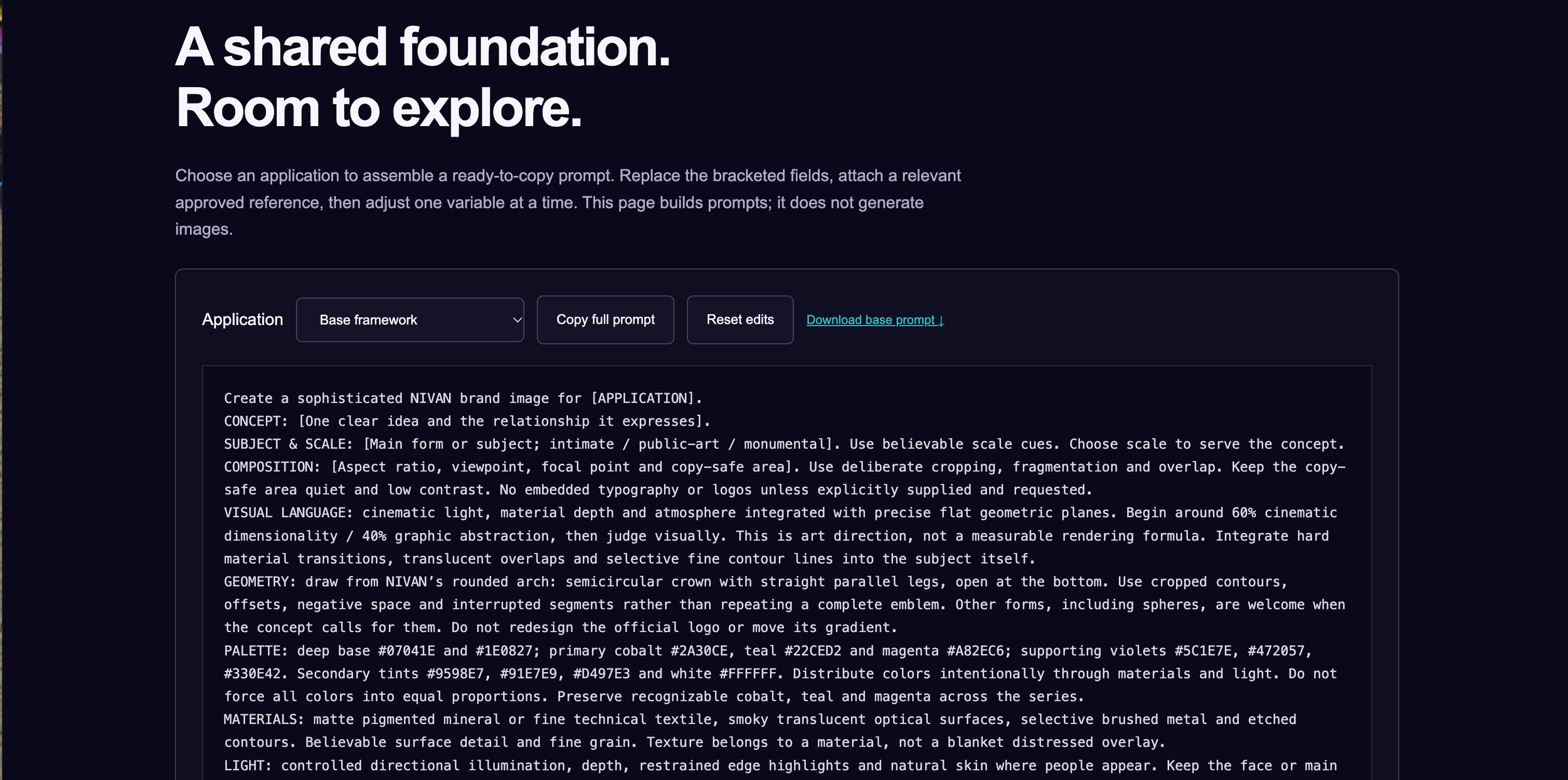
I'm also evolving Nivan's creative direction for 2027 with an image system built for AI-generated work. Real event photography always sits in the foreground, separate from generated backgrounds. The process is written down: set the layout first, change one variable at a time, and record every prompt, model and approval. Nothing joins the system until it passes a review standard, including a likeness check on any AI-altered speaker portrait.
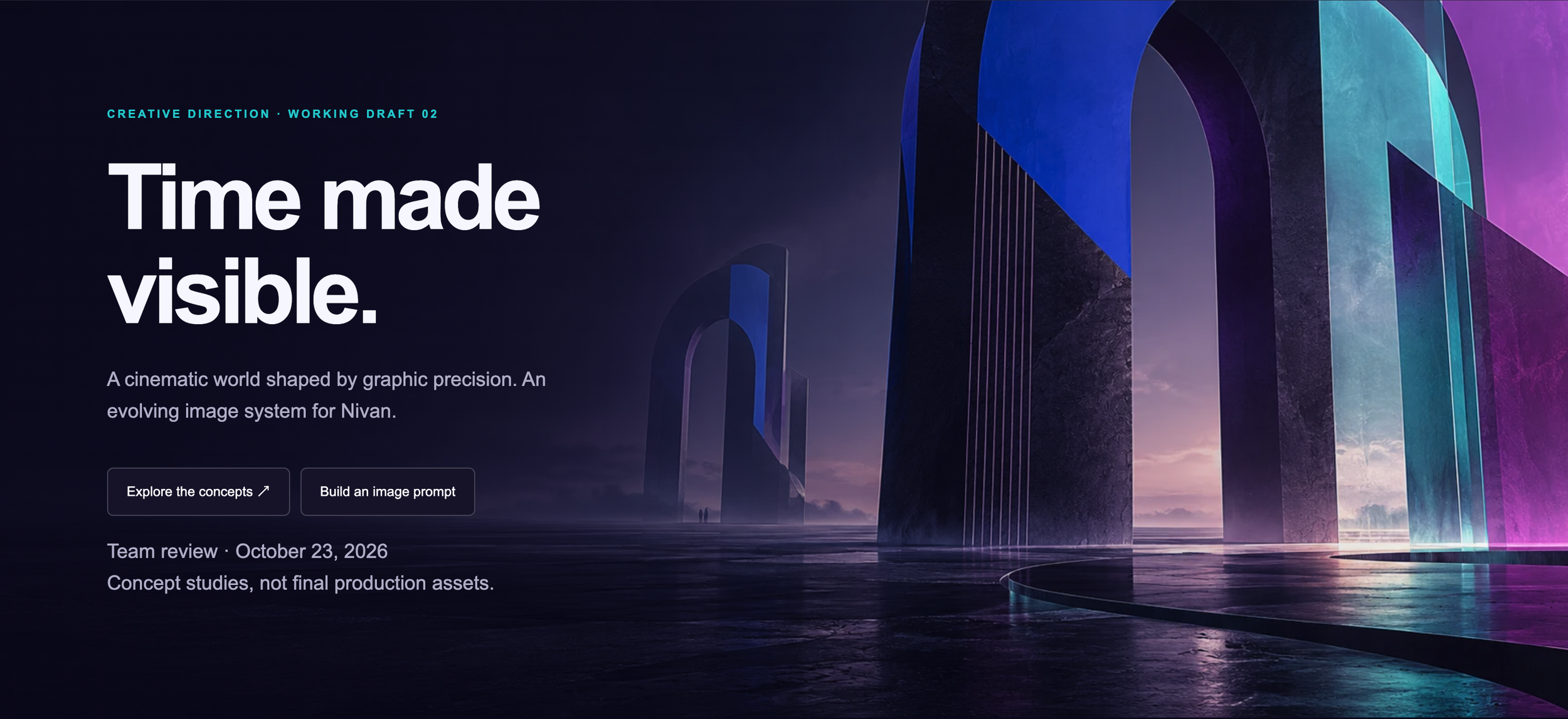
The 2027 image system guide, working draft: real photography in front, one system across experiences, likeness checked on every portrait.